

Treatment led by
Paul Flint · Dentist & Co-Principal · GDC No. 83634Treatments · Invisalign
Most adults who want straighter teeth are stopped by one image: themselves, in a work meeting, wearing train-track braces. Invisalign removes that obstacle. A series of custom-made, virtually invisible aligners moves your teeth a fraction of a millimetre at a time — planned digitally, so you can watch your predicted end result on screen before you commit to anything. You’ll eat what you like, brush as normal, and most people around you will never know.
Treatment led by
Paul Flint · Dentist & Co-Principal · GDC No. 83634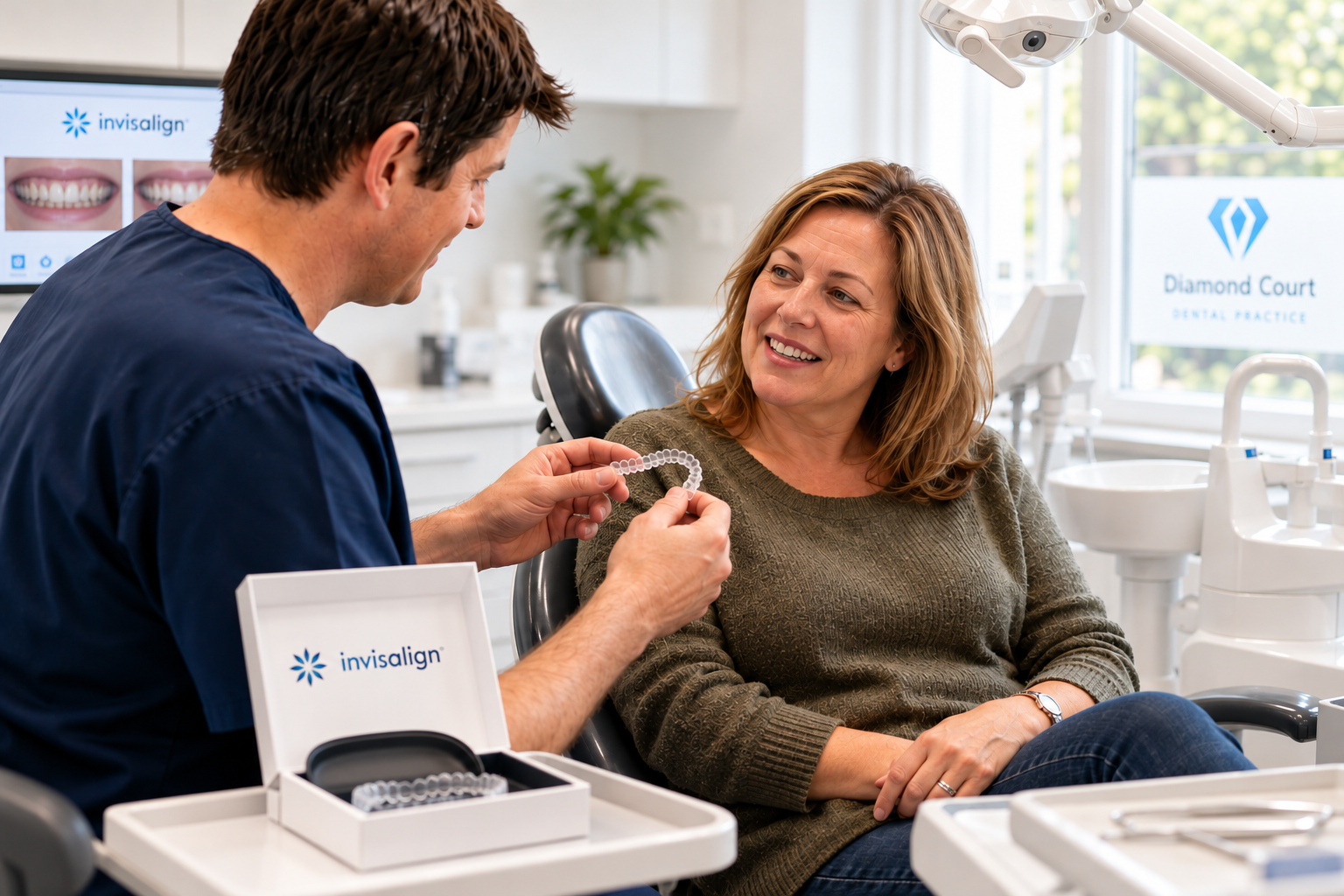
Initial assessment
Free
No obligation to proceed
Treatment time
6–18 months
Depending on your case
Check-ins
Every 6–8 wks
Quick progress reviews
Lifestyle
Removable
For eating, cleaning — and photos
Google reviews
 Will N.1 month ago: read Will N.'s review on Google (opens in a new tab)G
 Nick5 months ago: read Nick's review on Google (opens in a new tab)G
 Charles F.11 months ago: read Charles F.'s review on Google (opens in a new tab)G
 Con O.1 year ago: read Con O.'s review on Google (opens in a new tab)G
 Matt K.2 years ago: read Matt K.'s review on Google (opens in a new tab)G
 Samantha S.3 years ago: read Samantha S.'s review on Google (opens in a new tab)G
 Alexandria D.3 years ago: read Alexandria D.'s review on Google (opens in a new tab)G
 Marina W.4 years ago: read Marina W.'s review on Google (opens in a new tab)G
 Hannah H.4 years ago: read Hannah H.'s review on Google (opens in a new tab)G
Is it right for you?
Invisalign suits a great many adults — but not every case. The free assessment is where we tell you honestly whether it’s the right tool for your smile.
Why Invisalign
Invisalign works around your life rather than the other way round — invisible to look at, removable when it matters, and planned so you approve the destination before you set off.
The aligners are made from clear, precision-trimmed plastic that hugs your teeth. Most people simply don’t spot them.
Your digital smile plan shows the predicted final position of every tooth. You approve the destination before the journey begins.
Take them out to eat, brush and floss normally. Curry, coffee and corn on the cob remain on the menu.
No wires to tighten; you change aligner sets at home and we check progress every 6–8 weeks.
Your journey
Invisalign is a digital process, so much of the thinking happens before a single aligner goes in. Here’s how it runs.
Free assessment
Start from your sofa: send a photo via our free e-consultation, or book a free in-practice Invisalign assessment.
Your digital smile plan
A detailed 3D scan of your teeth (no gag-inducing impression trays) becomes a stage-by-stage movement plan — and a preview of your finished smile.
Wear, switch, repeat
Each aligner nudges teeth about a quarter of a millimetre, worn ~22 hours a day and changed as directed.
The reveal & the keeping
Retainers lock in your result. Many patients finish with whitening and composite edge-bonding — the “Invisalign finish” that makes the final photos sing.


The honest picture
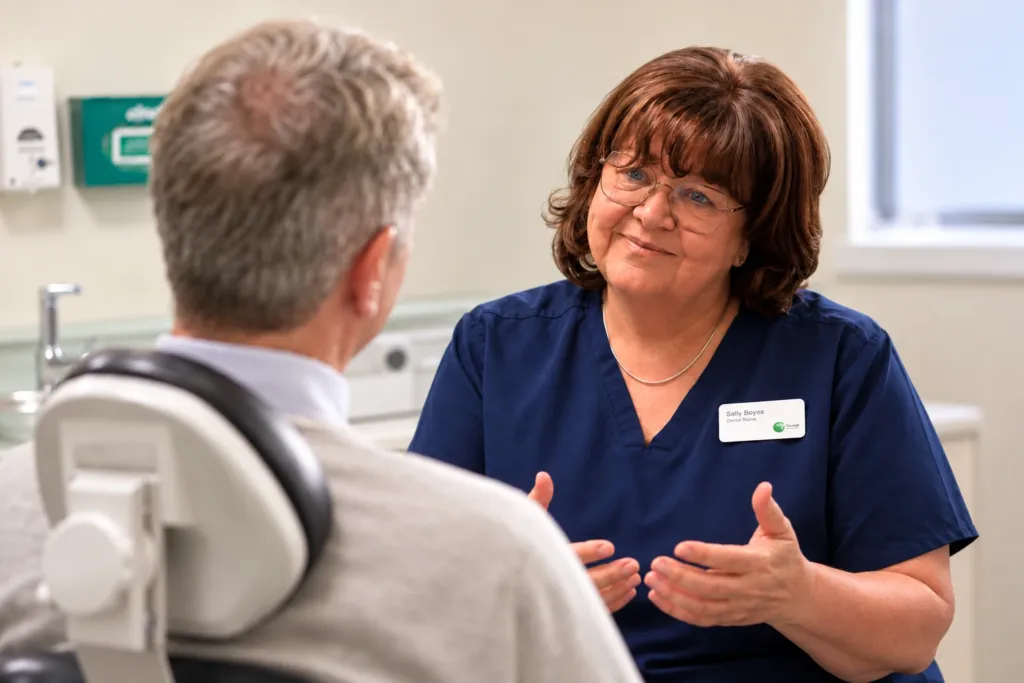
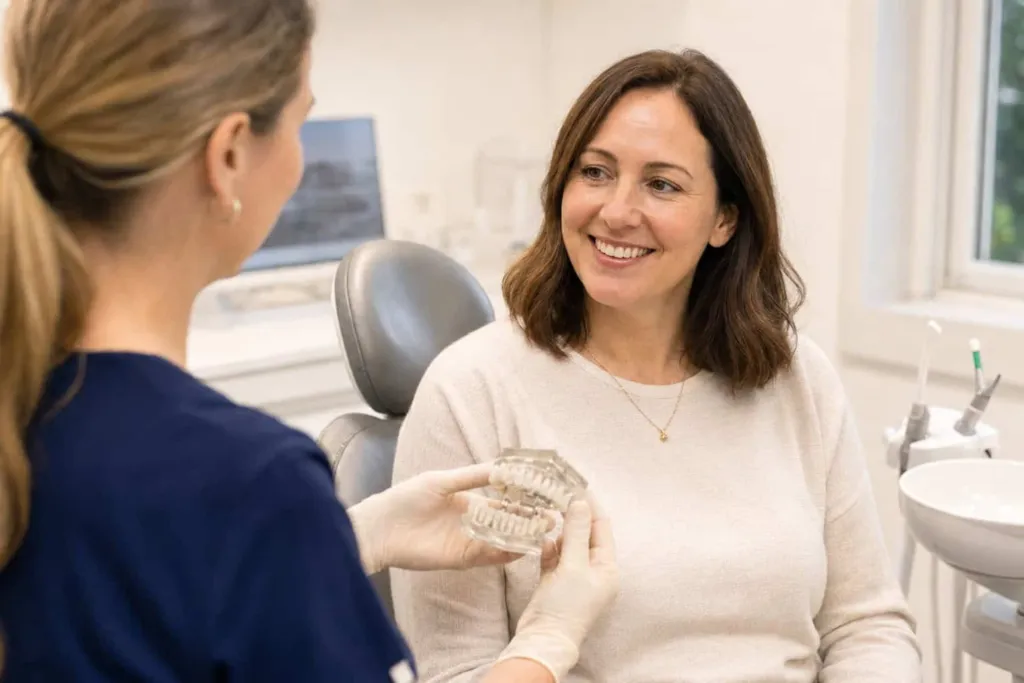
Invisalign is brilliant for the right case. Part of doing it well is being honest about where it isn’t the answer.
Not every case
Invisalign handles most — but not all — orthodontic problems; complex bite corrections may be better served by fixed braces, and we’ll say so at the free assessment.
Results depend on wear
Aligners in a drawer move nothing — your result depends entirely on wearing them around 22 hours a day.
Retainers are forever
Teeth have long memories: retainers (usually worn at night) are a lifelong commitment after any straightening — and they’re included in your plan and estimate.

Your clinician
Dentist & Co-Principal
GDC No. 83634
Invisalign at Diamond Court is led by co-principal Paul Flint.
He will talk you through whether clear aligners suit your teeth, show you the planned result, and compare the alternatives honestly before anything starts.
Making it last
The straightening is the easy bit to keep — as long as you respect the retainers and treat the aligners kindly.
Wear your retainers
Forever is the honest answer — retention is what protects the result after any straightening.
Clean gently
Cool water and a soft brush, never hot water — heat warps the plastic out of shape.
Case, not napkin
The number-one cause of lost aligners is a cafe tray. Keep the case in your pocket.
Common questions
Rarely. From conversational distance the aligners are essentially invisible — many patients tell us even close colleagues never clocked them.
Expect firm pressure for a day or two with each new set — the feeling of teeth on the move. Most people describe it as “aware”, not painful.
A slight lisp is common for the first day or two, then your tongue adapts and it vanishes.
Simple crowding can be under 6 months; typical cases run 6–18. Your digital plan gives you the number of aligners — and therefore the timeline — up front.
Extremely common and usually very fixable — relapse cases are often among the quickest.
Your assessment is free, and your written quote covers everything: aligners, reviews, and retainers.
Take the first step
Book a free Invisalign assessment — or send a photo through our e-consultation from home. You’ll see a preview of your predicted result and a full written quote before you commit to anything.
Assessment free · full written quote before you start.