
 Will N.1 month ago: read Will N.'s review on Google (opens in a new tab)G
Sam was such great help on the phone when rearranging my appointment. Top service
Treatments · Crowns
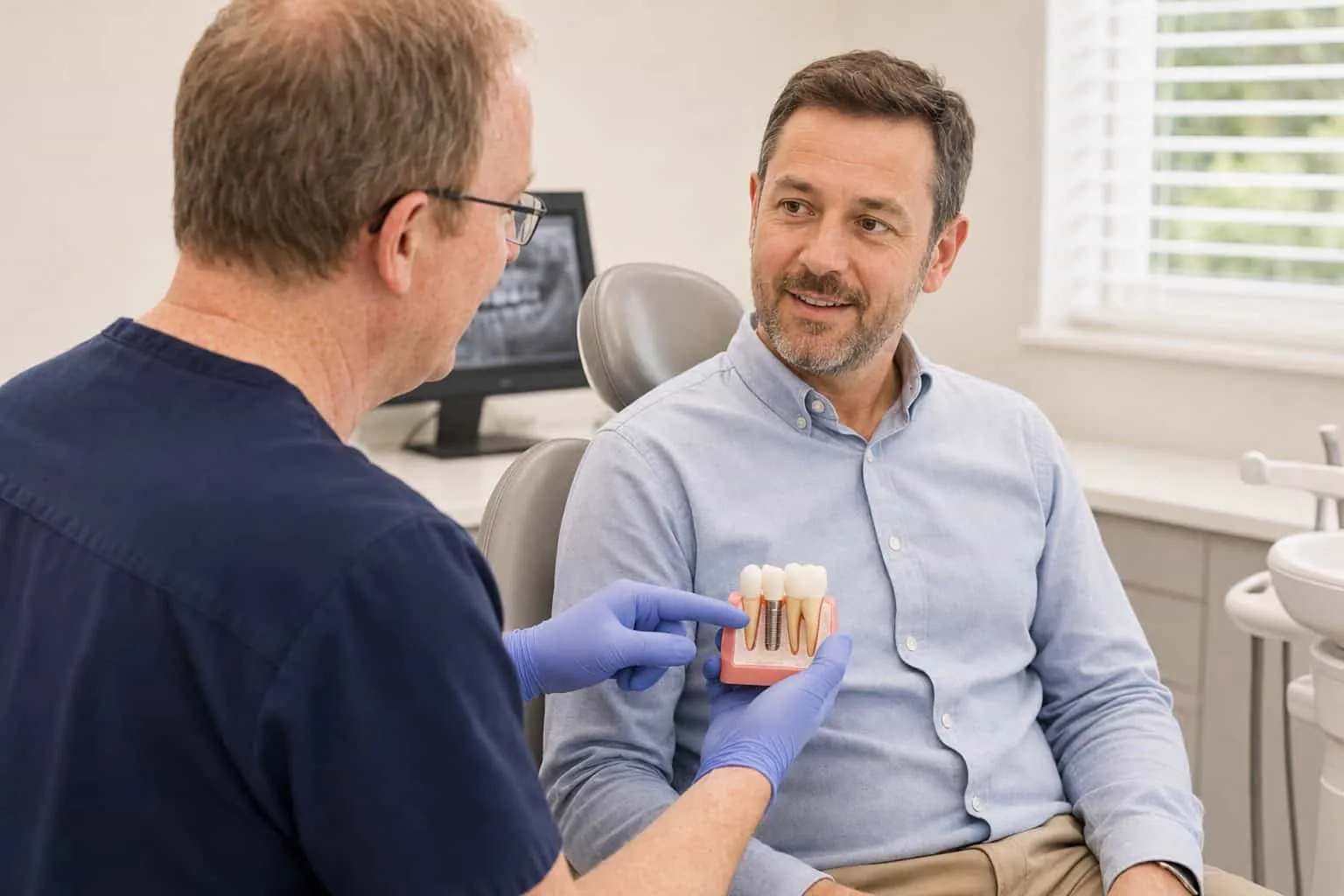
Some teeth have simply been through too much — decades of fillings, a fracture, a root canal — and need more than another patch. A crown is a precision-made restoration designed to protect your remaining tooth structure and restore the look of a natural tooth. Modern all-ceramic crowns have no dark metal margin at the gum, so nobody sees anything but a healthy tooth.
Cost
On our price list
All-ceramic and gold options priced separately
Visits
Usually 2
Temporary in between
Comfort
Local anaesthetic
Comfortable throughout
Longevity
Case by case
Your dentist will talk it through
Google reviews
Will N.1 month ago: read Will N.'s review on Google (opens in a new tab)G Nick5 months ago: read Nick's review on Google (opens in a new tab)G
 Charles F.11 months ago: read Charles F.'s review on Google (opens in a new tab)G
 Con O.1 year ago: read Con O.'s review on Google (opens in a new tab)G
 Matt K.2 years ago: read Matt K.'s review on Google (opens in a new tab)G
 Samantha S.3 years ago: read Samantha S.'s review on Google (opens in a new tab)G
 Alexandria D.3 years ago: read Alexandria D.'s review on Google (opens in a new tab)G
 Marina W.4 years ago: read Marina W.'s review on Google (opens in a new tab)G
 Hannah H.4 years ago: read Hannah H.'s review on Google (opens in a new tab)G
Is it right for you?
A crown is the right answer when a tooth needs wrapping and protecting, not just patching. These are the usual signs.
Why a crown
By covering the whole tooth, a crown protects what remains and helps stop cracks spreading — often the difference between keeping a tooth and losing it.
Many patients find they can chew on a crowned tooth comfortably again, rather than favouring the other side.
All-ceramic materials mimic enamel’s translucency, and front-tooth crowns are matched by a skilled ceramist to their neighbours.
By covering the tooth, a crown helps stop cracks spreading — often the difference between keeping a tooth and losing it.
Aesthetic ceramics for the smile line; high-strength ceramics or traditional gold where bite forces are brutal.
Your journey
A crown is made to a careful prescription. Here’s how yours comes together.
Assessment & preparation
The tooth is shaped under local anaesthetic, a precise impression or scan is taken, and a temporary crown protects things meanwhile.
Craftsmanship
A dental laboratory hand-builds your crown to prescription: shade, shape, translucency, bite.
The fit
Checked for contact, colour and comfort, then cemented. Most patients stop thinking about the tooth entirely — the highest compliment a crown gets.




The honest picture
A crown is a big, irreversible step, so we only recommend one when it’s genuinely the strongest option.
Sometimes an onlay is smarter
Crowning reshapes the tooth and is irreversible. For smaller problems an onlay or large filling may serve better — and we’ll say so.
A small risk to flag
A small percentage of crowned teeth can become sensitive or need root treatment later; we’ll assess that risk with you honestly beforehand.
Making it last
A crown protects the tooth, but the join at the gum is still yours to keep healthy.
Brush and clean between
Crowned teeth still decay at the margins — treat them like any other tooth.
A nightguard if you grind
Your crown will thank you for it.
Keep your check-ups
We spot margin wear years before it becomes a problem.
Common questions
Yes — for front teeth we take shade-matching seriously (photos, natural light, ceramist notes). Well-made crowns are effectively undetectable.
An onlay covers only the damaged part and preserves more tooth. Where it’s suitable, we’ll offer it — it’s often the smarter choice.
No — it’s done under local anaesthetic. Expect a few days of mild sensitivity afterwards, especially with temporaries.
It depends on many things — your bite, any grinding, your diet and how the tooth is looked after — so your dentist will talk it through for your own case.
Take the first step
Book an assessment and we’ll tell you honestly whether a crown, an onlay or something simpler is the right protection — with a written plan and cost before anything starts. A free e-consultation is a fine first step.
Priced in your written plan · fees on our price list.