

Treatment led by
Jamie Denholm · Dentist & Co-Principal · GDC No. 82438Treatments · Composite bonding
If cosmetic dentistry has a “why didn’t I do this years ago?” treatment, this is it. Composite bonding rebuilds chips, closes small gaps and restores worn edges using tooth-coloured resin, sculpted directly onto your teeth by hand and polished until it disappears — usually with no drilling, and usually with no injection. You walk in with the chip you’ve tongued for a decade; you walk out without it.
Treatment led by
Jamie Denholm · Dentist & Co-Principal · GDC No. 82438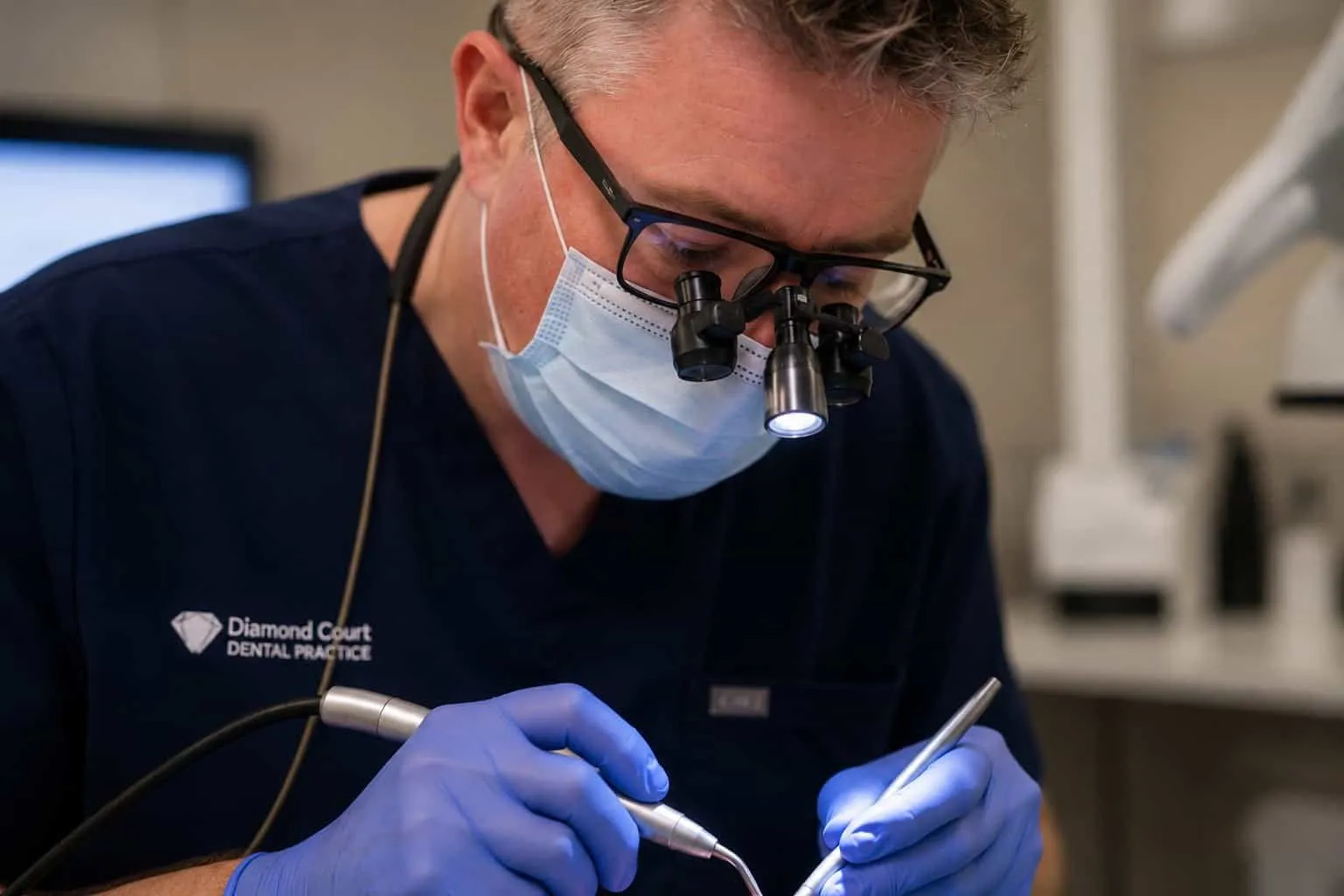
Assessment
Free 15-min
Then priced per tooth in your plan
Appointments
1–4 hours
Depending on your case and staging
Comfort
Usually no anaesthetic
Little or no drilling
Reversible
In most cases
Additive — nothing drilled away
Google reviews
 Will N.1 month ago: read Will N.'s review on Google (opens in a new tab)G
 Nick5 months ago: read Nick's review on Google (opens in a new tab)G
 Charles F.11 months ago: read Charles F.'s review on Google (opens in a new tab)G
 Con O.1 year ago: read Con O.'s review on Google (opens in a new tab)G
 Matt K.2 years ago: read Matt K.'s review on Google (opens in a new tab)G
 Samantha S.3 years ago: read Samantha S.'s review on Google (opens in a new tab)G
 Alexandria D.3 years ago: read Alexandria D.'s review on Google (opens in a new tab)G
 Marina W.4 years ago: read Marina W.'s review on Google (opens in a new tab)G
 Hannah H.4 years ago: read Hannah H.'s review on Google (opens in a new tab)G
Is it right for you?
Bonding is the kind, quick, low-commitment fix for a lot of everyday smile niggles. These are the classics we see.
Why bonding
Bonding delivers a striking share of the veneer effect — usually without touching healthy enamel, which is why it’s one of the only reversible cosmetic treatments there is.
You watch a chip that has bothered you for years disappear in the chair.
Little or no drilling. In most cases bonding is additive — which also means it’s reversible. Almost nothing else in dentistry can say that.
Bonding delivers a striking share of the veneer effect for considerably less per tooth.
Layered, sculpted and polished by hand at the chairside — the dentist is the lab.
Your journey
Appointments take one to four hours, depending on your case and how the treatment is staged. Here’s the sequence.
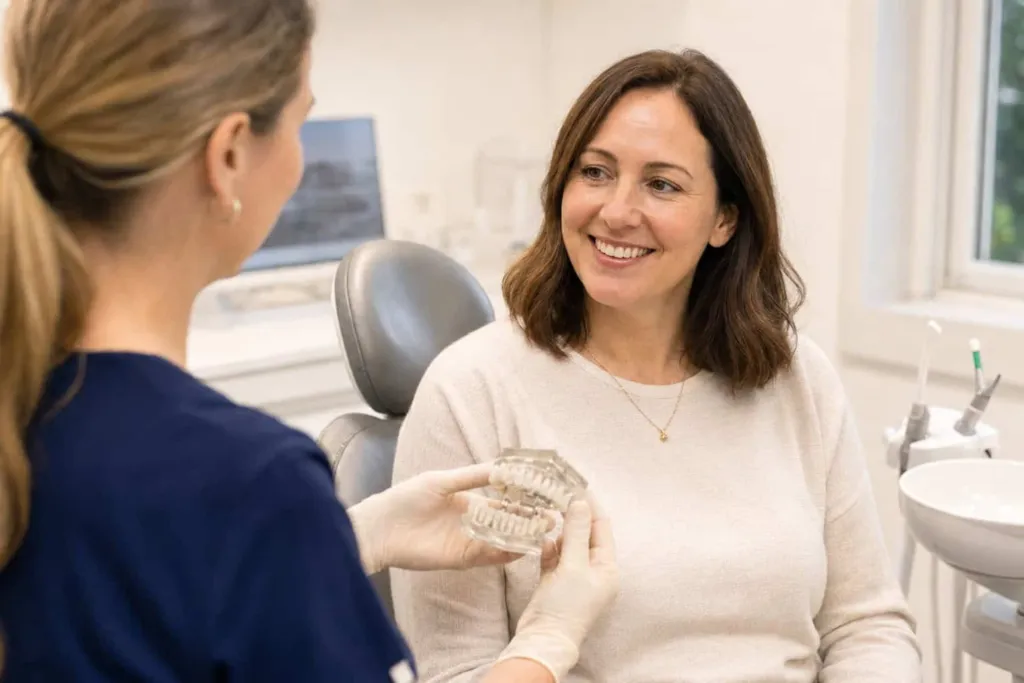
Free 15-minute assessment
Or start from a photo via e-consultation. We confirm bonding will achieve what you want (and say so if it won’t).
The build
The tooth surface is gently conditioned, then composite is layered in shades that match your enamel, shaped, and set instantly with light.
The polish
The step that separates good bonding from great: high-gloss polishing until the resin is indistinguishable from the tooth around it.


The honest picture
Bonding is the kinder, cheaper choice — and honesty about the trade-off is part of the deal.
Upkeep is the trade-off
Composite can pick up stains over time and chips more readily than porcelain, so it may need an occasional re-polish or small repair — quick and inexpensive.
Grinders need a guard
Heavy grinders may need a nightguard to protect the work.
Whiten first
If you want whiter teeth too, whiten before bonding — composite is colour-matched on the day and won’t lighten afterwards.

Your clinician
Dentist & Co-Principal
GDC No. 82438
Composite bonding at Diamond Court is carried out by co-principal Jamie Denholm. Cosmetic dentistry is a particular interest of his, and as an undergraduate he received an award for his skills in restorative dentistry.
Jamie has been at the practice since graduating in 2003 and became co-principal in 2007. He’ll talk you through bonding alongside whitening and veneers, so you can weigh up the options before anything is done.
2003
At the practice since graduating
2007
Became co-principal
Making it last
Bonding rewards a few small habits — mostly about stains and not using your teeth as tools.
Rinse after staining food
Re-polishing at hygiene visits keeps the gloss looking new.
No nail-biting or pen-chewing
Nail-biting, pen-chewing and parcel-tape-tearing are bonding’s three natural enemies.
Wear a guard if you grind
Heavy grinding is the quickest way to chip composite.
Common questions
Almost never — most bonding needs no injection at all. Patients regularly describe it as the most relaxed cosmetic treatment they’ve had.
Appointments take between one and four hours, depending on your case and how the treatment is staged.
Small-to-moderate gaps, yes — often the same day. Larger gaps may look better with a combined plan (a little alignment first, then bonding).
If you want maximum longevity and stain-resistance, porcelain wins. If you want minimal intervention, reversibility and value, bonding wins. We’ll help you choose with zero agenda.
Modern composites come in dozens of enamel shades and translucencies. Layered and polished properly, they photograph beautifully.
Take the first step
Book a free 15-minute bonding assessment, or send a photo through our e-consultation. We’ll confirm bonding will get you what you want — and price it per tooth in a written plan before we start.
Free 15-minute assessment · then priced per tooth.