

Treatment led by
Paul Flint · Dentist & Co-Principal · GDC No. 83634Treatments · Fixed braces
Clear aligners get the headlines, but for complex tooth movements, fixed braces remain the precision instrument of orthodontics — capable of corrections no aligner can reliably achieve. Modern fixed appliances are smaller and sleeker than the ones you remember from school, with tooth-coloured ceramic options for the self-conscious. If your case genuinely needs them, we’ll tell you — and if it doesn’t, we’ll tell you that too.
Treatment led by
Paul Flint · Dentist & Co-Principal · GDC No. 83634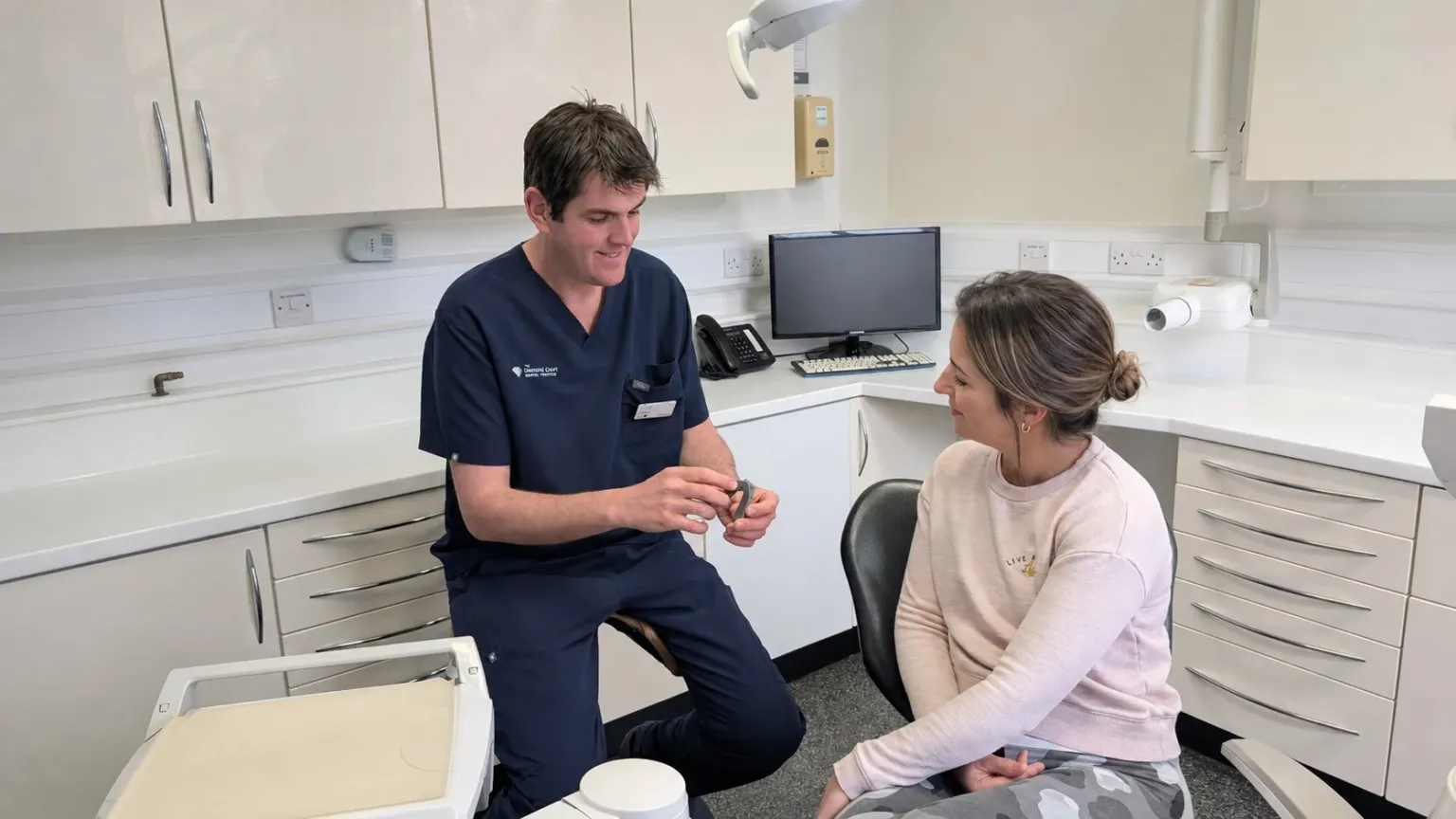
Fees
After assessment
Quoted in your written plan
Treatment
12–24 months
Depending on the case
Adjustments
Every 6–8 wks
The wire is progressed
Who for
Teens & adults
Healthy teeth and gums
Google reviews
 Will N.1 month ago: read Will N.'s review on Google (opens in a new tab)G
 Nick5 months ago: read Nick's review on Google (opens in a new tab)G
 Charles F.11 months ago: read Charles F.'s review on Google (opens in a new tab)G
 Con O.1 year ago: read Con O.'s review on Google (opens in a new tab)G
 Matt K.2 years ago: read Matt K.'s review on Google (opens in a new tab)G
 Samantha S.3 years ago: read Samantha S.'s review on Google (opens in a new tab)G
 Alexandria D.3 years ago: read Alexandria D.'s review on Google (opens in a new tab)G
 Marina W.4 years ago: read Marina W.'s review on Google (opens in a new tab)G
 Hannah H.4 years ago: read Hannah H.'s review on Google (opens in a new tab)G
Is it right for you?
Fixed braces are the precision tool for cases aligners can’t reliably reach. These are the ones they suit.
Why fixed braces
Fixed appliances deliver forces aligners struggle to — with no compliance anxiety, discreet options, and fingertip control over the finish.
Root movements, rotations, significant bite corrections: fixed appliances apply forces aligners struggle to deliver.
Braces are on duty 24/7. No wear-time tracking, nothing to lose at a cafe.
Tooth-coloured ceramic brackets fade into your smile at conversational distance.
For that last half-millimetre of perfection, a fixed appliance gives your dentist fingertip control.
Your journey
Braces work steadily in the background between short, regular visits. Here’s the arc.
Assessment
Records, photos and an honest conversation: braces, aligners, or nothing at all — you’ll leave knowing which and why.
The fitting
Brackets bonded, wire placed, survival kit issued (wax, tiny brushes, the works). An hour or so, no anaesthetic.
Adjustments
Every 6–8 weeks the wire is progressed. Between visits, your teeth quietly get on with moving.
The reveal & retainers
Debond day is genuinely one of the happiest appointments in dentistry. Retainers then guard the result — permanently.



The honest picture
Braces are effective and reliable — and they ask something of you in return.
Upkeep is real
Excellent cleaning around brackets (we’ll show you the kit), a truce with toffee and crusty baguettes, and a few days of tenderness after each adjustment.
Retention is lifelong
Teeth drift back without it — retainers afterwards are non-negotiable.
Aligners might suit too
If your case would be equally served by Invisalign, we’ll say so and let you choose on lifestyle.

Your clinician
Dentist & Co-Principal
GDC No. 83634
Fixed braces at Diamond Court are led by co-principal Paul Flint.
He will assess whether fixed braces are the right option for your teeth and explain the alternatives honestly before anything starts.
Making it last
Keeping braces clean and your result stable comes down to a routine you can actually sustain.
Retainers, for keeps
Wear them as advised — it’s what protects the result.
A routine you can sustain
We’ll build a cleaning routine around brackets with you.
Guard for contact sports
A mouthguard worn over braces protects both.
Common questions
No. Healthy teeth and gums move at any age — adult orthodontics is one of dentistry’s fastest-growing areas.
Complex bite corrections favour braces; mild-to-moderate crowding suits aligners; plenty of cases could go either way — then it’s about your lifestyle, not our preference.
Fitting is painless; expect aching teeth for a few days after each adjustment — the sensation of progress.
Occasionally, for severe crowding. It’s case-by-case, and we’ll explain the reasoning fully before anything is decided.
Take the first step
Book an orthodontic assessment and you’ll leave knowing whether braces, aligners or nothing at all is right — and why. Prefer to start from home? Send a photo through our free e-consultation.
Fees quoted after assessment.