
 Will N.1 month ago: read Will N.'s review on Google (opens in a new tab)G
Sam was such great help on the phone when rearranging my appointment. Top service
Treatments · TMJ & jaw problems
Waking with a dull headache? Jaw that clicks like a metronome? Teeth mysteriously chipping, or a partner reporting grinding noises at 3am? These threads usually lead back to one place: the temporomandibular joint (TMJ) and the silent night-shift of clenching and grinding. It’s one of dentistry’s most under-diagnosed problems. Initial management happens here in the practice, with referral options for more complex cases.
Assessment
On our price list
Advice and diagnosis
Splint
Custom-made
Quoted in your plan
Relief
Within weeks
Often, for many patients
Focus
Night grinding
The silent night-shift
Google reviews
Will N.1 month ago: read Will N.'s review on Google (opens in a new tab)G Nick5 months ago: read Nick's review on Google (opens in a new tab)G
 Charles F.11 months ago: read Charles F.'s review on Google (opens in a new tab)G
 Con O.1 year ago: read Con O.'s review on Google (opens in a new tab)G
 Matt K.2 years ago: read Matt K.'s review on Google (opens in a new tab)G
 Samantha S.3 years ago: read Samantha S.'s review on Google (opens in a new tab)G
 Alexandria D.3 years ago: read Alexandria D.'s review on Google (opens in a new tab)G
 Marina W.4 years ago: read Marina W.'s review on Google (opens in a new tab)G
 Hannah H.4 years ago: read Hannah H.'s review on Google (opens in a new tab)G
Is it right for you?
TMJ trouble hides behind everyday symptoms that rarely get connected. These are the tell-tale threads.
Why treat it here
A structured jaw, muscle and bite assessment often finds the pattern in one visit — and a custom splint protects your teeth while the muscles calm down.
Many TMJ sufferers have bounced between GP, pharmacist and painkillers for years. A structured jaw, muscle and bite assessment frequently finds the pattern in one visit.
A slim, custom nightguard calms overworked muscles and shields your teeth from grinding forces — many patients notice easier mornings within weeks.
Every night of grinding is enamel you don’t get back. Protection now beats reconstruction later.
Where grinding has already worn teeth down, our dentists can plan the repair here, joined-up with the cause.
Your journey
Understanding what’s happening is often half the relief. Here’s how we get there.
The assessment
Jaw joints, muscles, bite, tooth-wear patterns, and your history — including stress and sleep, the usual co-conspirators.
The explanation
We show you what’s happening and why. (Most patients find the explanation alone half the relief.)
Splint therapy
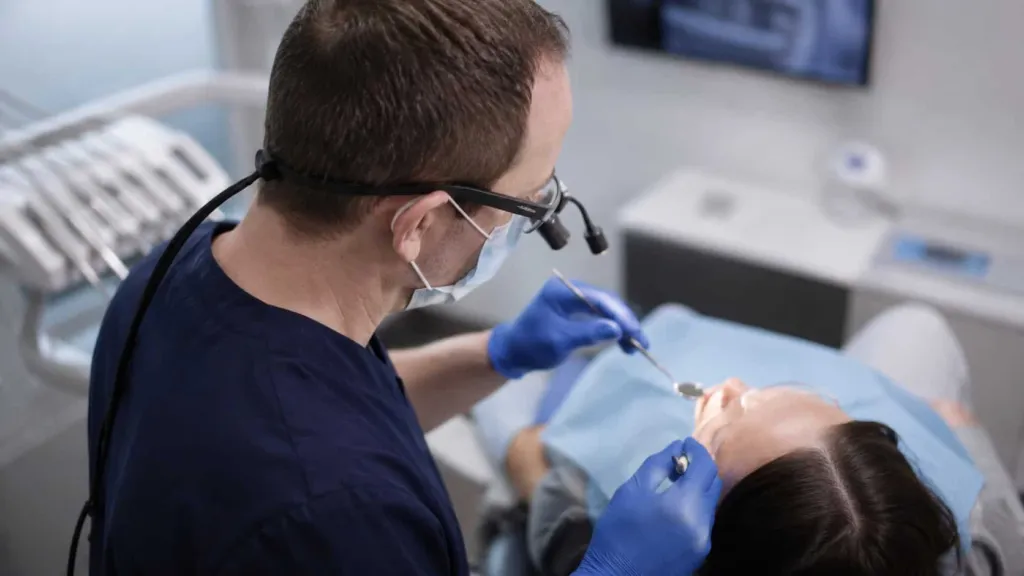
Impressions for a custom occlusal splint, fitted and fine-tuned to your bite.
Review & rebuild
We monitor symptoms, adjust as needed, and plan restoration of any already-worn teeth when the time is right.



The honest picture
TMJ care is about sensible management, not miracle cures — and we’ll be honest about what a splint can and can’t do.
Managed, not cured
Think of a splint as reading glasses for your jaw, not an antibiotic — it manages the problem rather than curing it.
Referral when it helps
Initial management happens here in the practice. For more complex cases we will discuss referral options with you, and stress, posture or sleep factors may mean a physiotherapist can help too.
What we won't do
Watch your teeth wear away while calling it normal.
Making it last
A splint only works when it’s worn — and a little daytime awareness helps as much as the appliance.
Wear it as prescribed
It only works in your mouth — consistency is everything.
Notice daytime clenching
Lips together, teeth apart is the resting position.
Bring it to check-ups
So we can monitor wear and adjust as your bite settles.
Common questions
Stress, sleep patterns, caffeine and bite factors all contribute. Most grinders have no idea they do it — the evidence is in the wear.
Cheap boil-and-bite guards can actually worsen some jaw problems by propping the bite wrongly. A splint is made to your exact bite — that’s the whole point of it.
Very commonly — the jaw-closing muscles run up your temples. Morning-dominant headaches are the classic giveaway.
Painless clicking is common and often needs nothing but monitoring. Clicking with pain or locking deserves assessment.
Take the first step
Book a jaw assessment and we’ll find the pattern behind the headaches, clicking or worn teeth — then protect what’s there with a splint made for your bite. Not sure where to start? Try a free e-consultation.
Assessment fee on our price list · splint quoted in your plan.